Our expertise

Axxon Technology: High-Performance Composite Components in Pre-Impregnated Carbon

Axxon - la qualité

Axxon pushes the boundaries of composite engineering: thanks to its unique process and decades of expertise, every mast is lighter, better performing, and of impeccable quality.

Axxon technology is built on a unique mastery in high-performance composite materials, particularly carbon fibre and pre-impregnated carbon. Our advanced moulding processes, combined with rigorous quality control, ensure composite components of exceptional precision and reliability. Each project benefits from meticulous engineering, from the selection of the finest carbon fibres to their implementation through autoclave curing.


Thanks to this expertise, Axxon Composites designs and manufactures highly technical components in pre-impregnated carbon, capable of meeting the demanding requirements of marine professionals. The use of female moulds and successive vacuum processes makes it possible to achieve lightweight yet strong structures, while ensuring a flawless surface finish straight out of the mould.


Beyond the performance of materials such as carbon fibre, Axxon technology is driven by a culture of continuous innovation, such as research into new composites, performance optimisation, and ongoing process improvement. Each project is an opportunity to push boundaries and deliver reliable, competitive pre-impregnated carbon solutions ready to meet the most ambitious challenges.
The use of pre-impregnated carbon fibre

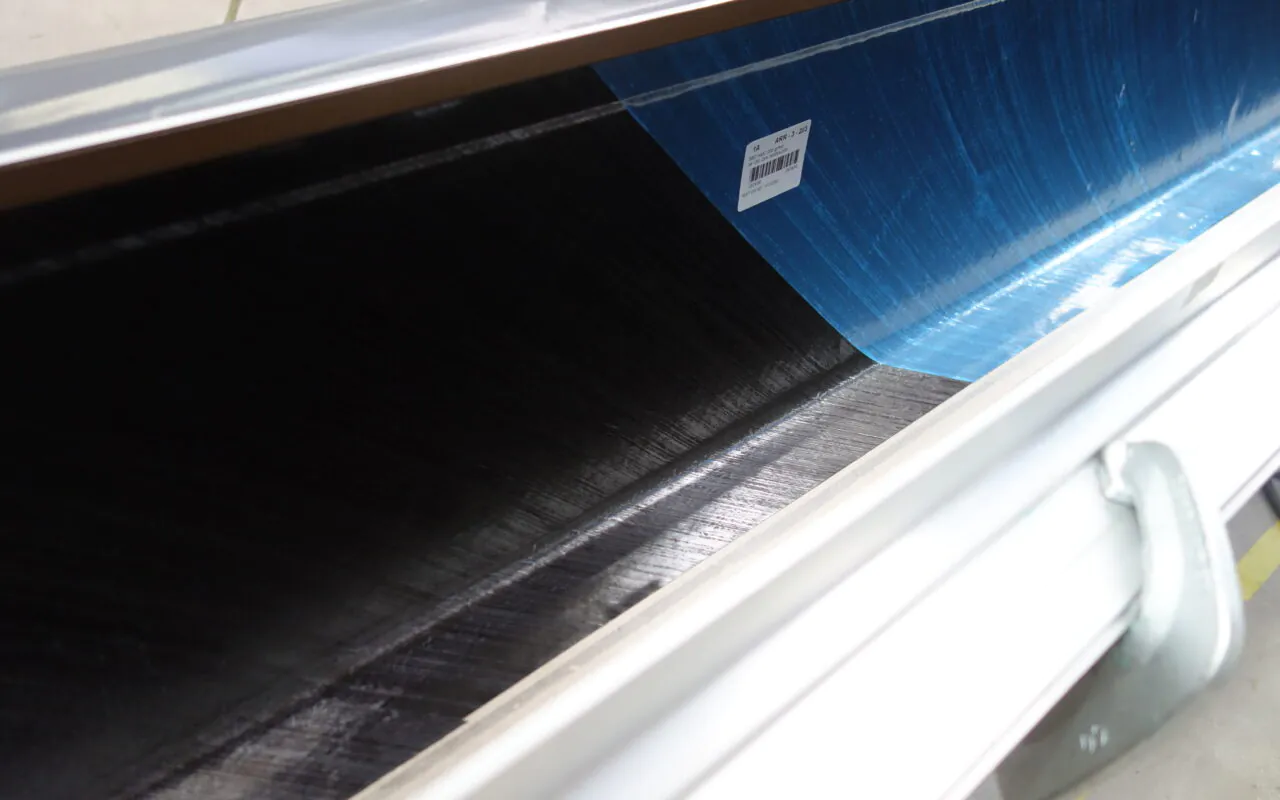
The masts are manufactured using pre-impregnated carbon, composed of 60% to 70% carbon fibres and 30% to 40% resin.

The fibre orientation is tailored to the local stresses in the mast, giving the composite different properties depending on the area.


For the production of its carbon masts, AXXON can use three types of fibres with different modulus levels (240 GPa, 392 GPa, and 455 GPa). This makes it possible to obtain three distinct carbon composites, varying in weight and performance.


The fibers that contribute to the mast’s stiffness are primarily those oriented along the mast’s axis. These fibers, known as UD (Unidirectional), account for between 65% and 75% of the tube’s weight.

A proven moulding process for high-precision composite components

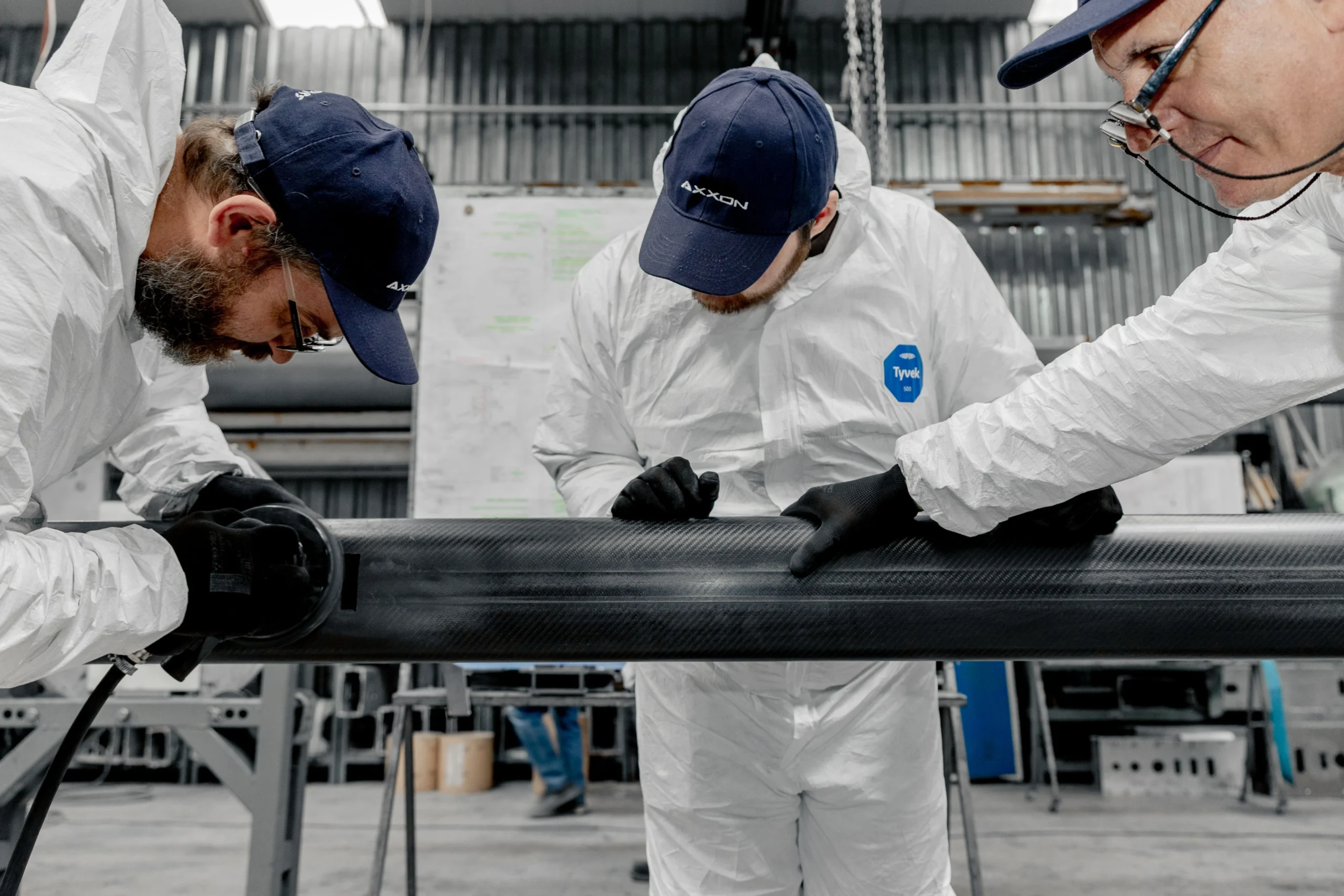
At Axxon Composites, we have mastered a unique female mold casting process for manufacturing carbon fibre tubes, such as masts.

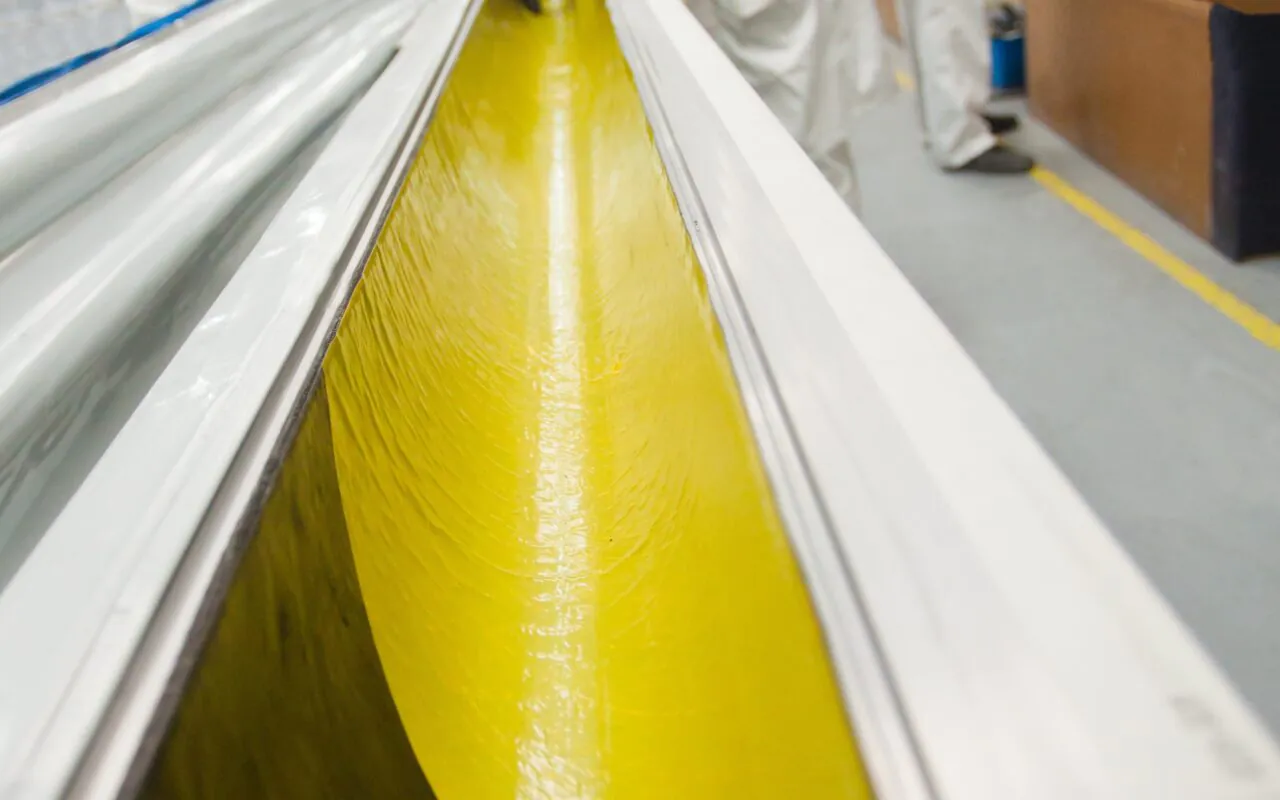
Unlike traditional methods such as filament winding or mandrel moulding, our technique relies on the use of pre-impregnated carbon fabrics carefully positioned within two aluminum female mold halves. This process makes it possible to produce a single-piece structure, consolidated and reinforced in a single curing cycle.


Intermediate compaction steps throughout the lay-up process ensure a high-quality final product. Localised reinforcements, or patches, are also added inside the tube to guarantee optimal resistance to specific load conditions. Once preparation is complete, the two mould halves are assembled and cured under pressure in an autoclave at 125°C, ensuring perfect fibre consolidation.


This process offers numerous advantages: it produces a composite with very low porosity and excellent mechanical properties, while also delivering an impeccable surface finish straight out of the mould, with no visible reinforcements.

Full control at every stage of the manufacturing process

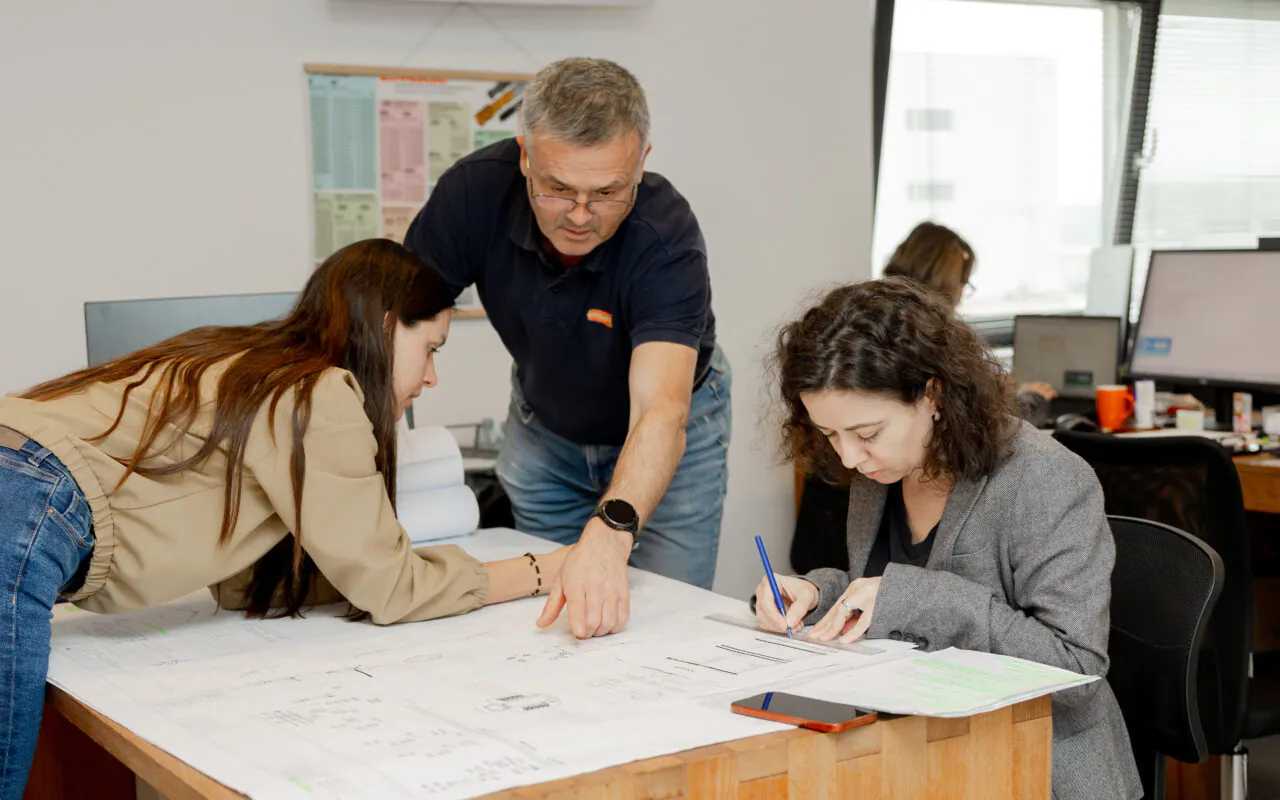
Design office

the design office develops detailed mast designs and optimises them prior to production, ensuring high-performance technical solutions.

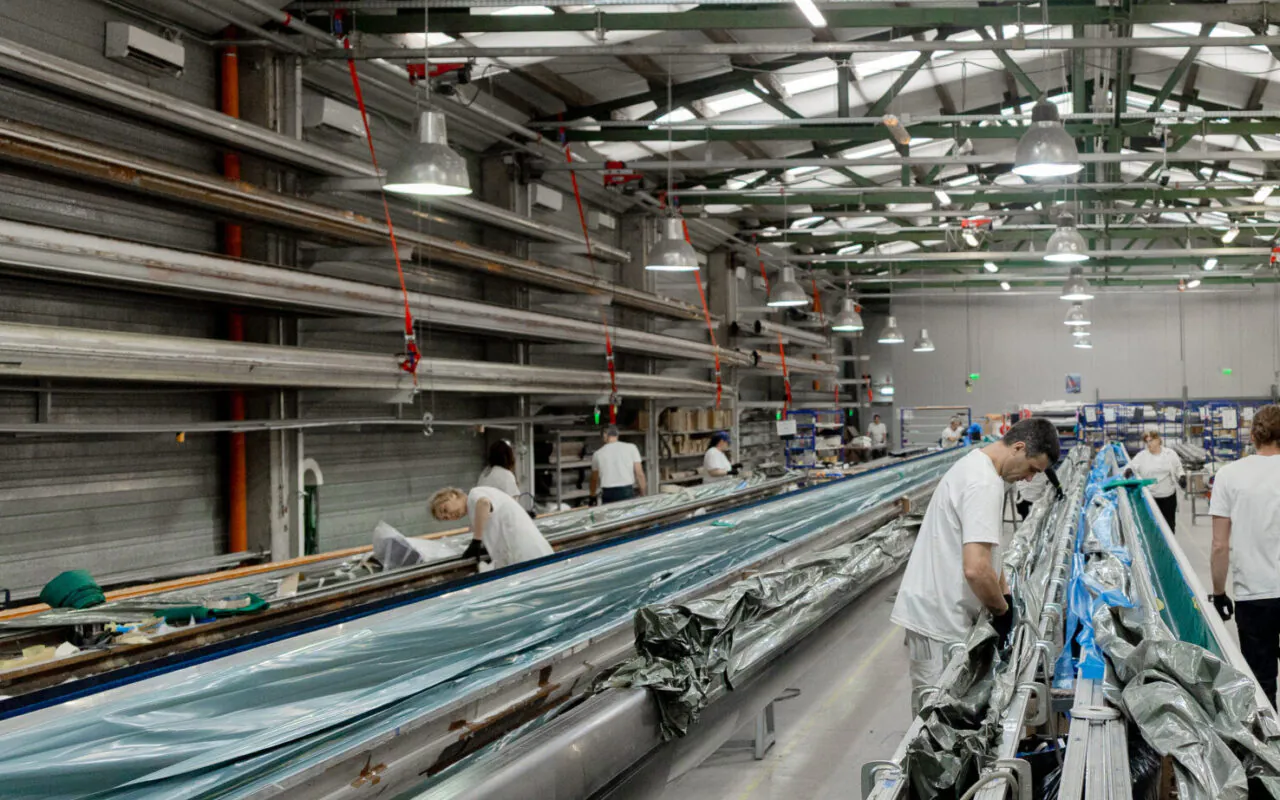
Lamination

this is the stage where the various layers of pre-impregnated carbon are precisely positioned and oriented inside the female moulds. Both moulds are vacuum-bagged to compact the carbon layers and remove any air bubbles.

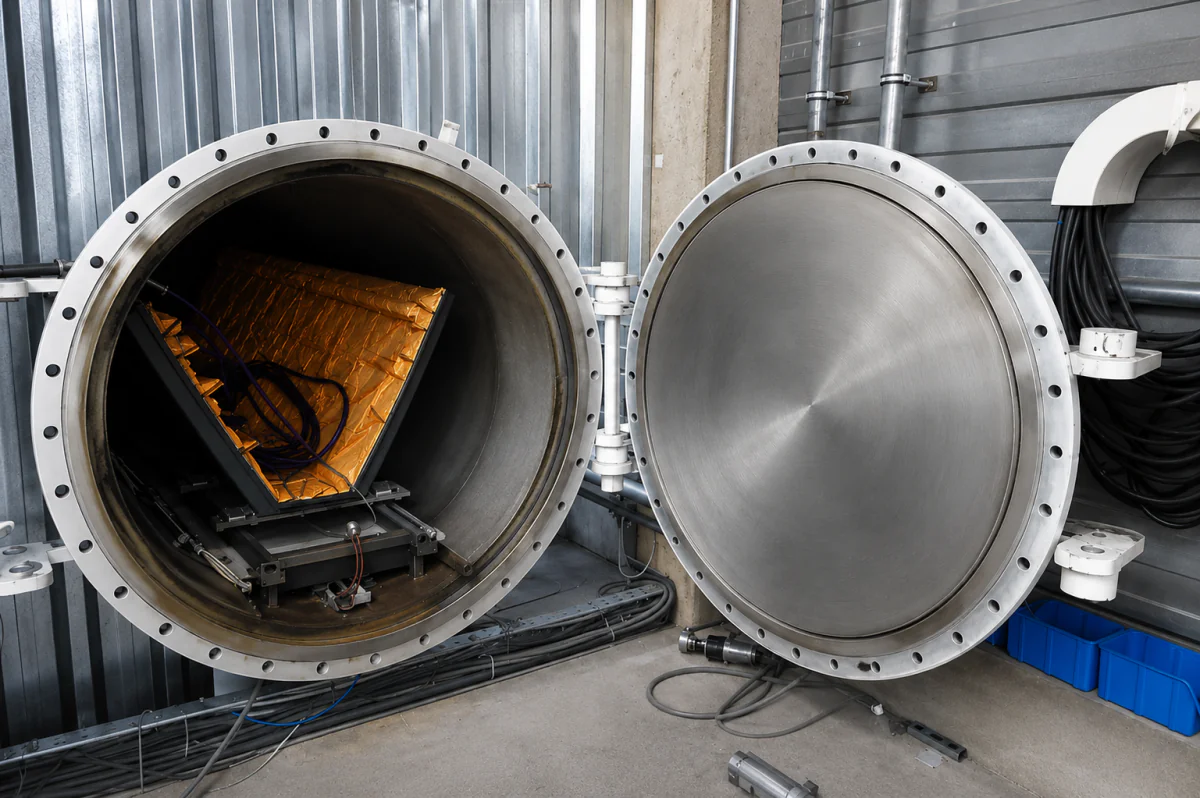
Assembly and curing

the two mould halves are then assembled to form the complete mast. The mast is placed in an autoclave for the curing phase, which permanently sets the resin and mechanical properties of the composite.

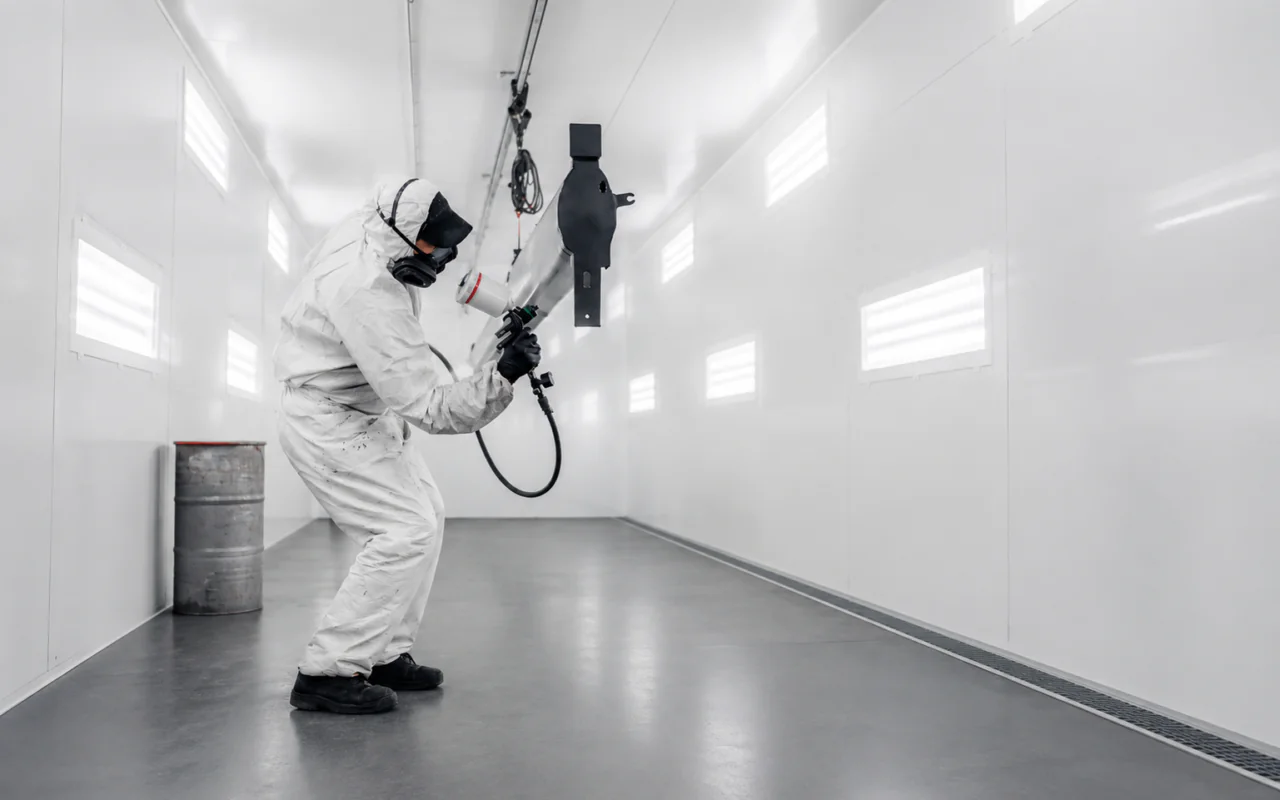
Painting and sanding

the masts are reworked, sanded, and painted in a dedicated booth to ensure a uniform finish and optimal surface preparation for subsequent stages.

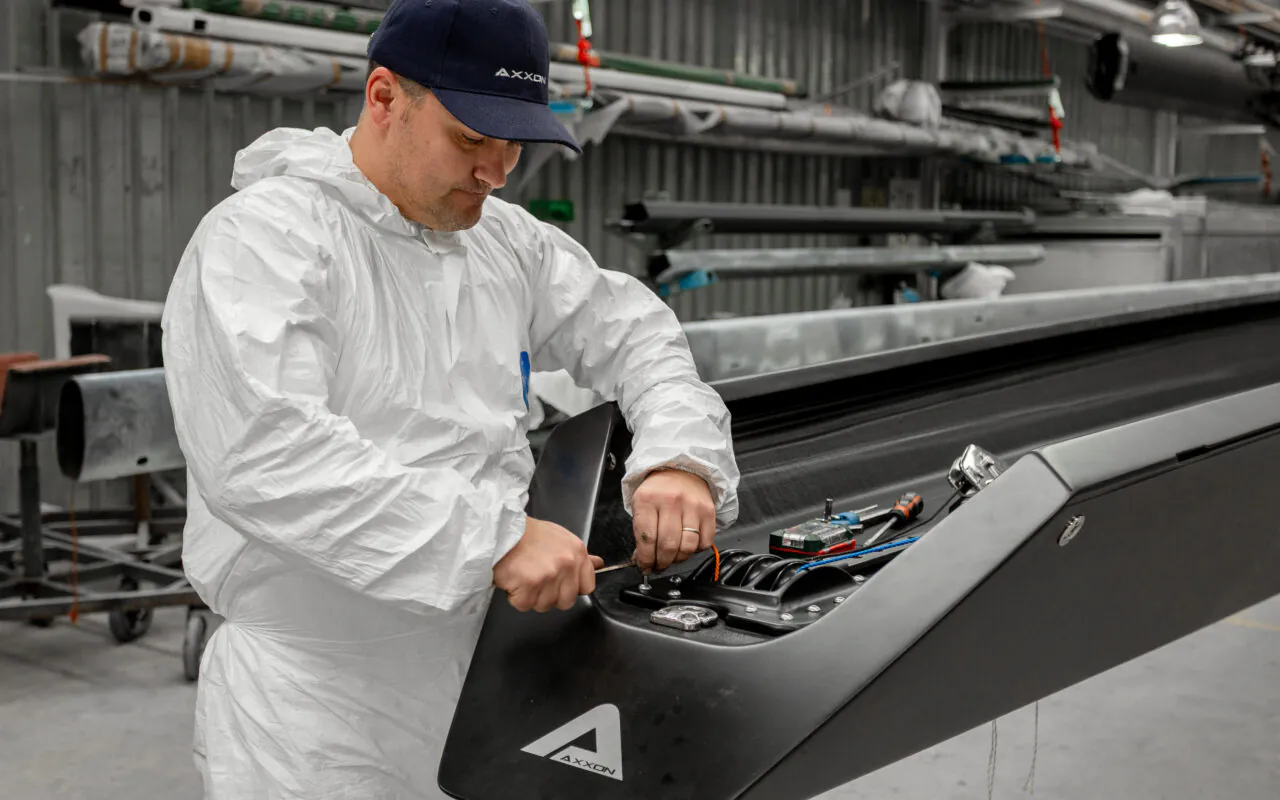
Rigging workshop

the integration of rigging components is carried out in a dedicated workshop, ensuring careful, precise installation perfectly adapted to each mast configuration.

Paiting booth